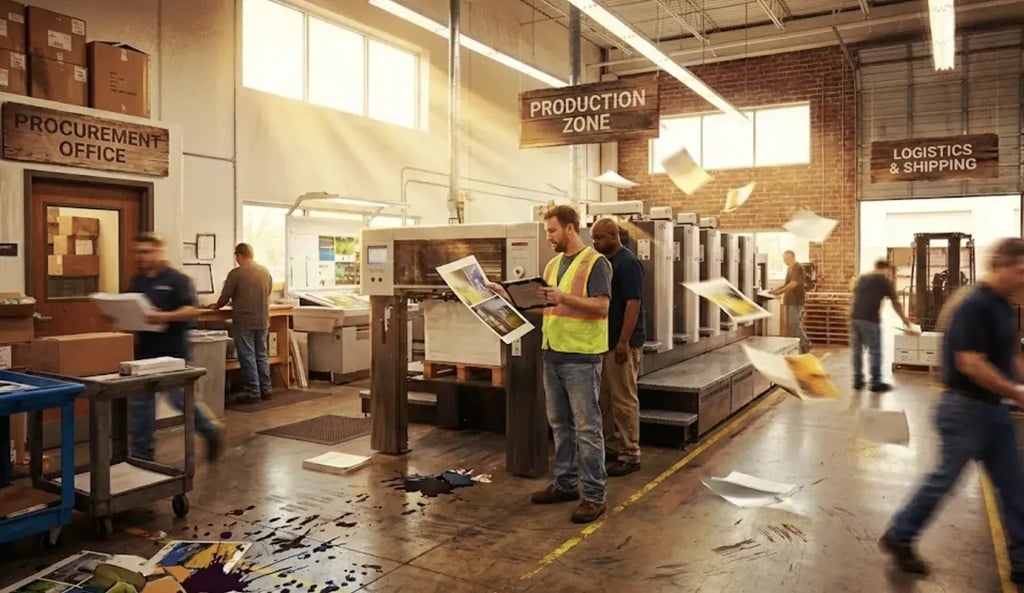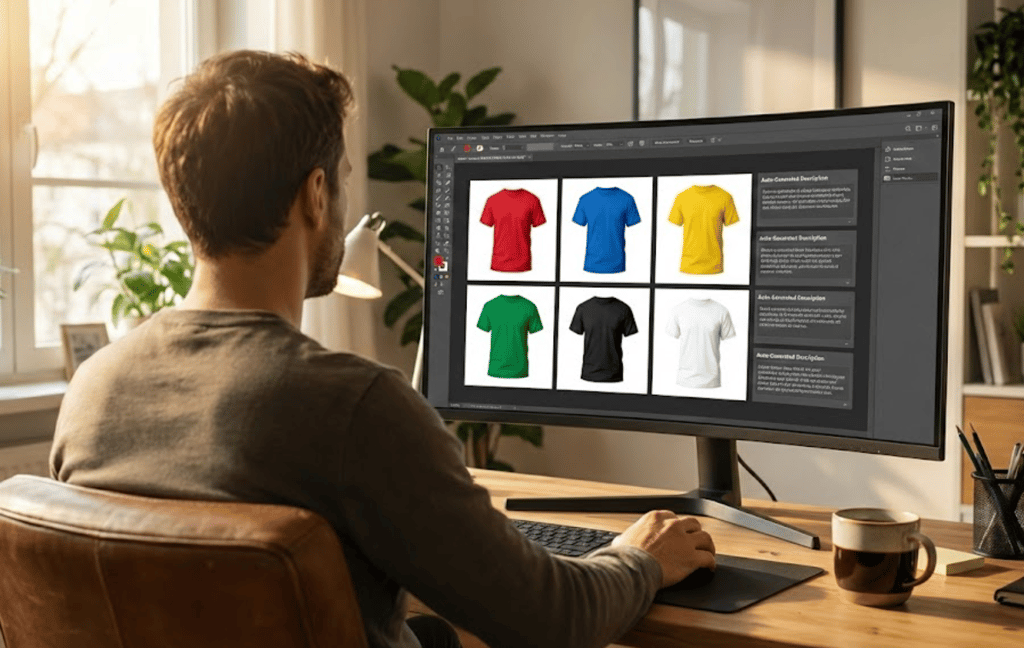
Traditional manufacturing operates on prediction: forecast demand weeks or months in advance, produce inventory based on those predictions, distribute to regional warehouses, and wait for sales that may or may not materialize. This model made economic sense when setup costs required long production runs, lead times measured in months, and consumer preferences remained relatively stable. But digital production technology, connected logistics networks, and real-time order management have eliminated these constraints while simultaneously increasing the risks of prediction-based approaches.
According to research from the State of UK Automation 2024-2025, manufacturers are increasingly investing in automation technologies to counter rising costs and improve efficiency. Technology investment in manufacturing increased 30% year over year as companies recognize that adopting smart manufacturing technology and automation represents the most effective strategy for mitigating both external risks (tariffs, logistics costs, market volatility) and internal challenges (labor shortages, operational inefficiency, quality control).
Print-on-demand fulfillment replaces forecasting with real-time production, manufacturing products only after orders arrive. This fundamental shift eliminates inventory risk, enables unlimited product variety, and transforms manufacturing economics from high-risk speculation to low-risk response. The question isn't whether on-demand production works (proven by operations like ESP Colour doubling profit margins in three months), but rather how quickly traditional manufacturers can transition before competitors capture market share through superior responsiveness.
Why Prediction-Based Manufacturing Fails
Forecasting creates three compounding problems that worsen as markets accelerate and fragment. First, predictions are increasingly wrong in fast-moving markets. Consumer preferences shift monthly or weekly rather than seasonally, driven by social media trends, viral content, and rapid cultural evolution. What seemed like a safe bet six months ago when inventory commitments were made may be completely outdated when products reach market. Between 2022 and 2027, the digital print industry is estimated to grow by $90 billion, representing twice the entire global music industry. This explosive growth concentrates in customized, personalized, and rapidly evolving product categories that fundamentally resist accurate forecasting.
Second, inventory carries substantial cost that accumulates throughout the product lifecycle. Warehousing expenses, insurance premiums, obsolescence risk, and capital opportunity cost consume 15-25% of inventory value annually. For products with short trend cycles or seasonal relevance, inventory value degrades rapidly, with markdowns often required to clear stock before it becomes completely unsaleable. The average manufacturer carries 20-30% excess inventory that will sell at reduced margins or not sell at all, representing thousands to millions in lost profitability depending on operation scale.
Third, forecast-driven production limits innovation and market responsiveness. Long lead times and minimum order quantities prevent rapid product iteration, personalization at scale, and testing of new designs without substantial financial commitment. Companies cannot serve niche markets profitably when production economics require high-volume runs. They cannot respond to trend shifts immediately when inventory commitments were made months earlier. They cannot offer true customization when products must be manufactured before purchase.
Research from the 2025 E-Commerce Trends Report shows that 88% of makers and manufacturers say sustainability is important to their business, with 53% actively eliminating plastic and unnecessary packaging. Forecast-based inventory directly conflicts with sustainability goals by creating waste through overproduction, excess packaging, long-distance shipping, and eventual disposal of unsold items. On-demand fulfillment addresses environmental concerns by producing only purchased items, shipping directly from local facilities, and eliminating deadstock waste entirely.
How Print-on-Demand Transforms Manufacturing Economics
GelatoConnect's platform demonstrates how fulfillment-based manufacturing operates in practice. When an order arrives through any channel (e-commerce store, B2B portal, marketplace integration, API connection), the system automatically routes it to the optimal production facility. The routing algorithm considers equipment availability (current job loads, maintenance schedules, technical capabilities), material costs (local supplier pricing, substrate availability, bulk discount opportunities), and shipping proximity (distance to customer, carrier options, delivery requirements).
Production begins immediately upon order routing, with jobs entering production queues based on delivery urgency and current capacity. Finished items ship directly to customers from local facilities, typically arriving within 2-3 days rather than the 7-10 days common with centralized production and distribution. This direct model eliminates the warehousing, regional distribution, and inventory management overhead that consumes 20-40% of traditional manufacturing costs.
The economic advantages multiply as operations scale. Zero inventory carrying costs eliminate the 15-25% annual expense of storing and managing stock. Twenty-five percent increased capacity without hiring through optimized workflows that automate previously manual coordination tasks. Forty percent lower shipping costs through local production that minimizes distances and enables ground delivery instead of expedited air freight. Oschatz Visuelle Medien reported 25% volume growth after implementing fulfillment-based operations, growth achieved without corresponding increases in inventory investment, warehouse space, or distribution complexity.
ESP Colour reduced cash locked in warehousing by 20%, saving $300,000 annually while doubling profit margins through combined benefits of eliminated inventory risk, optimized material procurement, and increased operational efficiency. The company reports that the fulfillment model enabled them to serve customers and markets they previously couldn't address profitably due to inventory economics. Low-volume custom work, personalized products, and niche market segments all became viable through on-demand production that makes setup costs and minimum volumes economically irrelevant.
McKinsey-verified research on GelatoConnect concluded that the platform can increase EBIT margins by 3-7 percentage points, more than doubling bottom lines for many manufacturers. This dramatic improvement stems from a combination of factors: eliminated inventory carrying charges, reduced warehousing overhead, optimized material procurement through network buying power, increased production efficiency through intelligent routing and automation, and higher revenue from ability to serve previously unprofitable market segments.
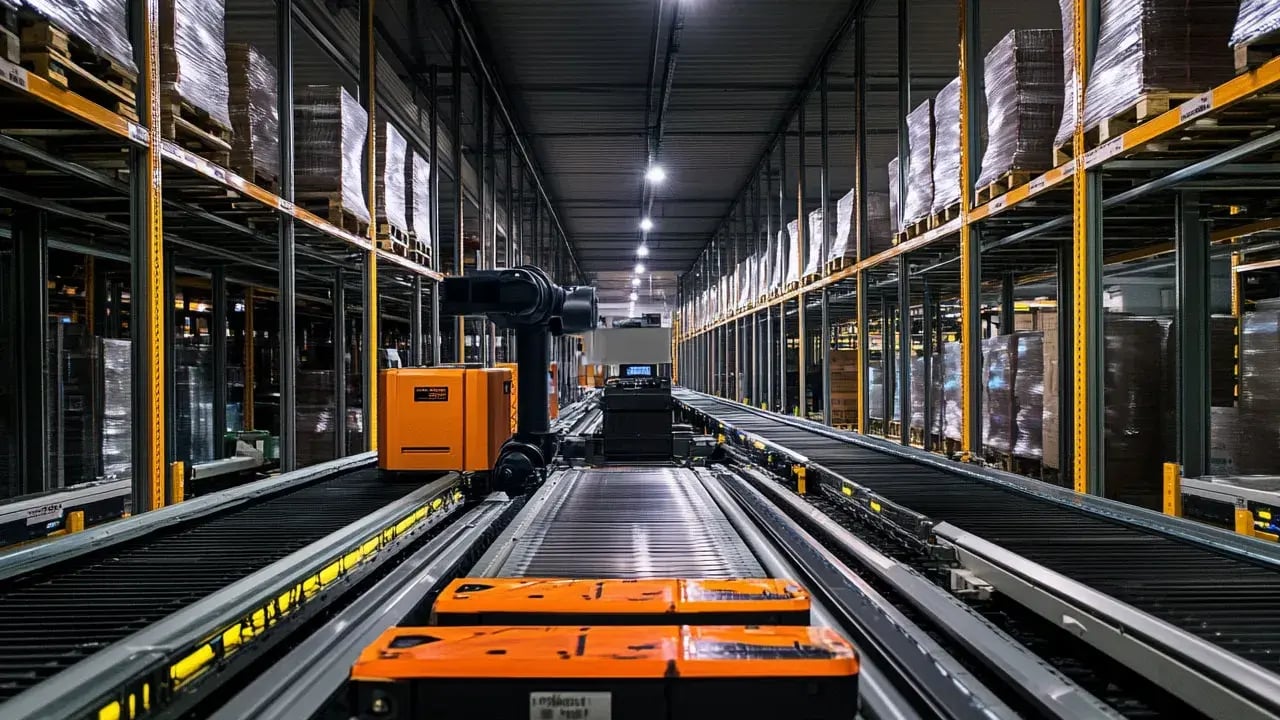
FAQ: Transitioning to Fulfillment-Based Production
Q: Can on-demand production handle our current volume without sacrificing speed or quality?
Yes. GelatoConnect's network approach scales dynamically by routing high volumes across multiple production facilities while maintaining quality consistency and delivery timelines. When a single facility reaches capacity, the system automatically distributes work across network partners, ensuring large orders fulfill as quickly as small ones. The network model enables essentially unlimited scale without the capacity constraints that limit single-facility operations.
Q: What about unit economics? Isn't bulk manufacturing cheaper per unit?
While per-unit production costs may be slightly higher in on-demand models compared to bulk manufacturing, total cost of ownership is substantially lower when accounting for all factors. Eliminated inventory risk (no deadstock write-offs or markdown requirements), reduced warehousing (minimal stock holding compared to forecast-based inventory), zero obsolescence cost (no products becoming outdated before selling), and optimized shipping (local production reduces freight costs by 40%) combine to reduce total costs by 15-25% despite marginally higher production costs per item.
Q: How quickly can we start producing on-demand without disrupting current operations?
GelatoConnect supports phased adoption that minimizes risk and enables learning through gradual transition. Most manufacturers start with specific product lines or customer segments, running them through on-demand production while maintaining traditional operations for other areas. This hybrid approach builds confidence and expertise before full commitment. The platform integrates with existing e-commerce systems, requires no hardware installation, and provides complete training and support during transition. Initial onboarding completes in days, with full operational competency typically achieved within 2-4 weeks.
Q: What happens to our existing inventory during the transition?
Most manufacturers phase in on-demand production gradually, starting with new products through the on-demand model while selling through existing inventory using traditional approaches. This hybrid strategy minimizes write-offs and waste while building confidence in the new model before full commitment. As existing inventory depletes naturally through sales, more products shift to on-demand production until the full catalog operates on fulfillment-based principles.
Conclusion
The future of manufacturing belongs to fulfillment, not forecasting. Companies that wait for perfect demand predictions will lose to competitors who produce responsively in real time based on actual orders rather than speculative forecasts. On-demand production through platforms like GelatoConnect transforms manufacturing from a high-risk inventory game requiring accurate predictions about unpredictable consumer behavior into a responsive, profitable, sustainable operation that produces exactly what customers purchase.
The market validates this shift through multiple independent indicators. Research shows that makers and manufacturers report 47% seeing increases in Millennial customers, 31% in Gen X customers, and 24% in Baby Boomer customers, indicating broad demographic acceptance of on-demand purchasing models. Additionally, 77% of manufacturers expect their social media and digital sales to increase over the next three to five years, driving demand for fulfillment models that enable direct-to-consumer sales without inventory intermediation.
Consumer behavior reinforces the trend toward on-demand production. According to e-commerce research, 62% of wholesale businesses offer product subscription services, with 71% selling to customers in other countries and 54% shipping internationally for 26-50% of orders. This geographic distribution of customers makes centralized inventory and regional distribution increasingly inefficient compared to network-based local production and direct fulfillment.
Sustainability pressures accelerate the transition as well. With 88% of manufacturers citing sustainability importance and 53% actively eliminating unnecessary packaging, the waste inherent in forecast-based overproduction faces increasing regulatory and consumer resistance. On-demand production directly addresses environmental concerns while simultaneously improving economic outcomes, a rare alignment where sustainability and profitability reinforce rather than conflict with each other.
Explore how GelatoConnect enables fulfillment-based manufacturing or read about successful short-run digital printing to see on-demand production in action. The question isn't whether to transition to on-demand production (the economics and market trends make this inevitable). The question is whether your operation will lead this transition as a competitive advantage or follow reactively after competitors have already captured market share through superior responsiveness and flexibility.