In an era where data drives business decisions, management information systems (MIS) have become the backbone of successful enterprises. These sophisticated technology frameworks collect, process, store, and distribute information that enables managers to make informed, strategic decisions. As businesses generate unprecedented volumes of data, MIS has evolved from basic record-keeping systems to intelligent platforms that provide real-time insights, predictive analytics, and automated workflows.
The global manufacturing execution systems market, a key component of modern MIS, reached USD 14.89 billion in 2024 and is projected to grow to USD 41.78 billion by 2032, exhibiting a compound annual growth rate of 14.1%. This explosive growth reflects the critical role these systems play in Industry 4.0 transformation, where connected devices, artificial intelligence, and automation converge to create smart factories.
For organizations across industries, particularly in manufacturing and print production, management information systems serve as the central nervous system that coordinates operations, optimizes resources, and delivers competitive advantages. Understanding what management information systems do and how they function is essential for business leaders seeking to leverage technology for operational excellence and strategic growth.
This comprehensive guide explores the role of MIS in modern business, its applications in manufacturing environments, and how integrated systems drive efficiency, reduce costs, and enable data-driven decision-making across enterprises.
Core Functions of Management Information Systems
Management information systems serve multiple critical functions within organizations, each designed to transform raw data into actionable business intelligence. Understanding these core capabilities reveals why MIS has become indispensable for modern enterprises.
Data Collection and Integration
The fundamental purpose of MIS is gathering data from diverse sources across the organization. These systems connect to multiple touchpoints including production equipment, inventory databases, customer relationship management platforms, financial systems, and supply chain networks. By integrating information from disparate sources, MIS creates a unified view of business operations.
In manufacturing environments, for example, MIS collects real-time data from sensors on production lines, quality control checkpoints, inventory systems, and shipping departments. A 2025 study on Industrial Internet of Things (IIoT) integration with MIS demonstrated a 28% improvement in production throughput and 22% reduction in downtime across test manufacturing sites when these systems worked together seamlessly.
This integration eliminates information silos that plague organizations operating disconnected systems. Rather than sales, production, and logistics maintaining separate databases that require manual reconciliation, MIS provides a single source of truth accessible to authorized users across departments. This unified data approach is fundamental to coordinated decision-making and operational efficiency.
Information Processing and Analysis
Once collected, data must be processed and analyzed to extract meaningful insights. Management information systems employ various analytical tools including statistical analysis, trend identification, pattern recognition, and increasingly, artificial intelligence and machine learning algorithms. These capabilities transform raw operational data into strategic business intelligence.
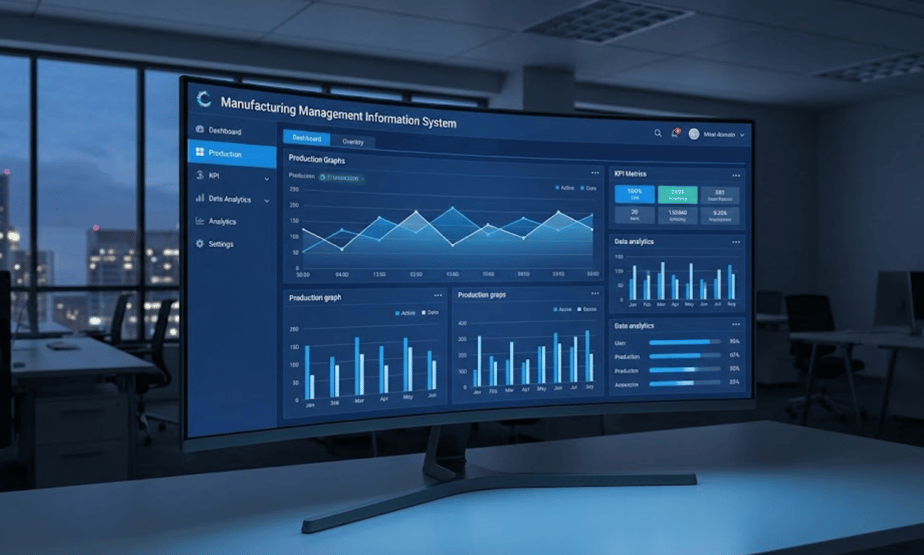
Modern MIS platforms generate automated reports, dashboards, and alerts that highlight key performance indicators (KPIs), exceptions requiring attention, and opportunities for optimization. For instance, integrated print production management systems analyze job data to identify bottlenecks, predict equipment maintenance needs, and optimize job scheduling for maximum throughput.
The evolution toward real-time processing represents a significant advancement in MIS capabilities. Historical systems operated on batch processing, generating periodic reports with inherent delays. Contemporary platforms provide live dashboards that update continuously, enabling managers to respond immediately to changing conditions rather than reacting to historical snapshots.
Decision Support and Strategic Planning
Beyond reporting what has happened, advanced MIS functions support decision-making about future actions. Decision support systems (DSS), a specialized category within MIS, help managers evaluate options, model scenarios, and select optimal courses of action. These tools incorporate both internal operational data and external market information to provide comprehensive decision context.
For strategic planning, MIS enables data-driven forecasting, resource allocation, and performance modeling. Executives can simulate the impact of various business strategies, evaluating outcomes before committing resources. This capability proves particularly valuable when considering major investments, market expansions, or operational changes where mistakes carry significant costs.
In manufacturing contexts, predictive maintenance represents a powerful application of MIS decision support. By analyzing equipment performance data, mean time between failures (MTBF), and operational conditions, systems can forecast when maintenance will be needed, extending intervals by approximately three to four days on average while improving equipment reliability. This shift from fixed maintenance schedules to condition-based approaches demonstrates how MIS transforms operational decision-making.
Operational Control and Automation
Management information systems don't merely inform decisions, they increasingly execute them through automated workflows and process controls. Transaction processing systems handle routine operational activities like order processing, inventory updates, payroll, and invoicing with minimal human intervention. This automation reduces errors, accelerates processing, and frees staff for higher-value activities.
Manufacturing execution systems (MES), a critical MIS component in production environments, monitor and control complex factory floor operations. These systems track work-in-process, manage production schedules, enforce quality procedures, and ensure compliance with specifications. According to industry data from Fortune Business Insights, implementing integrated IIoT-MIS frameworks results in predictive accuracy for potential failures reaching approximately 88.9%, dramatically reducing unexpected downtime.
Process automation extends beyond manufacturing to areas like print workflow automation, where intelligent systems route jobs, prepare files, schedule equipment, and manage production queues without manual intervention. This capability enables organizations to scale operations without proportional increases in administrative overhead.
 Types of Management Information Systems
Management information systems encompass various specialized categories, each designed to address specific business needs and operational domains. Understanding these distinctions helps organizations select appropriate technologies for their requirements.
Enterprise Resource Planning (ERP) Systems
ERP systems represent the most comprehensive category of MIS, integrating all core business processes into a unified platform. These systems coordinate finance, human resources, procurement, manufacturing, supply chain, and customer relationship functions, providing enterprise-wide visibility and control.
In manufacturing and production businesses, ERP systems serve as the central repository for master data including product specifications, bill of materials, pricing, customer information, and vendor relationships. They manage order-to-cash cycles, purchase-to-pay processes, and the full quote-to-delivery workflow. Leading providers like SAP SE and Oracle Corporation dominate the enterprise market, offering industry-specific modules tailored to manufacturing, healthcare, retail, and other sectors.
The value of ERP systems lies in their ability to eliminate redundant data entry, ensure information consistency across departments, and provide integrated reporting that spans functional boundaries. When a sales order is entered, the ERP automatically updates inventory availability, triggers production planning, schedules materials procurement, and initiates billing, all from a single transaction.
Manufacturing Execution Systems (MES)
MES platforms focus specifically on production floor operations, bridging the gap between enterprise planning systems and shop floor control equipment. These specialized systems track materials, monitor production progress, manage quality procedures, and provide real-time production performance data.
The global MES market has seen explosive growth, with Asia Pacific leading adoption due to rapid industrialization and manufacturing modernization initiatives like China's "Made in China 2025" program. MES provides the operational intelligence needed to achieve Industry 4.0 outcomes, serving as the backbone for smart factory initiatives.
For print production specifically, specialized print shop management systems function as industry-tailored MES platforms. They handle job ticketing, color management, equipment scheduling, substrate tracking, and shipping integration while accommodating the unique workflows and technical requirements of commercial printing operations.
Supply Chain Management (SCM) Systems
SCM systems coordinate the flow of materials, information, and finances across the entire supply network from raw material suppliers through manufacturing to final customer delivery. These platforms optimize inventory levels, manage supplier relationships, plan production schedules, and coordinate logistics to balance cost, service level, and working capital objectives.
Modern SCM systems incorporate demand forecasting, advanced planning and scheduling (APS), and optimization algorithms that determine optimal production sequences, transportation routes, and inventory positioning. The integration of SCM with other MIS components enables end-to-end supply chain visibility and coordination that dramatically reduces both inventory carrying costs and stockouts.
For businesses operating in on-demand production models, such as print service providers using GelatoConnect's platform, SCM integration enables automated stock replenishment based on actual consumption patterns. This capability has helped customers reduce inventory overhead by 20% while maintaining service levels through intelligent demand prediction and automated procurement.
Business Intelligence and Analytics Platforms
Business intelligence (BI) systems focus specifically on data analysis, reporting, and visualization. These platforms extract data from operational systems (ERP, MES, CRM, etc.), transform it for analytical purposes, and present insights through dashboards, reports, and interactive visualizations.
Advanced BI platforms incorporate predictive analytics that forecast future trends based on historical patterns, prescriptive analytics that recommend specific actions, and increasingly, artificial intelligence that identifies patterns and anomalies humans might miss. The employment of computer and information systems managers, who often oversee these BI implementations, is projected to grow 15% from 2024 to 2034, reflecting the increasing importance of data-driven decision-making.
Modern BI tools have become more accessible through self-service capabilities that allow business users to create their own reports and analyses without IT intervention. This democratization of data access enables faster decision-making and reduces bottlenecks that occurred when all analytical requests required specialized technical resources.
MIS in Manufacturing and Production Environments
The application of management information systems in manufacturing and production environments represents one of the most impactful use cases, where operational complexity, real-time coordination, and data-driven optimization deliver substantial competitive advantages.
Production Planning and Scheduling
Effective manufacturing requires coordinating materials, equipment, labor, and customer requirements in optimal sequences that maximize throughput while meeting delivery commitments. MIS platforms handle this complexity through advanced planning and scheduling algorithms that consider all constraints simultaneously.
These systems evaluate available capacity, material availability, order priorities, setup times, and delivery deadlines to generate production schedules that optimize facility utilization. When disruptions occur (equipment breakdown, material shortage, rush orders), the systems can rapidly replan to minimize impact. This dynamic scheduling capability proves particularly valuable in high-mix, low-volume production environments where conditions change frequently.
For print production operations managing hundreds of concurrent jobs across multiple presses, automated scheduling delivered by print production management systems can increase equipment utilization by 15-25% compared to manual planning approaches. The systems consider job specifications, substrate compatibility, color sequences, and changeover times to minimize waste and maximize productivity.
Quality Management and Control
Quality management systems (QMS), integrated within broader MIS frameworks, standardize and automate quality documentation, processes, and measurements. These systems ensure compliance with specifications, capture quality data at inspection points, track non-conformances, and drive corrective action processes.
In automated manufacturing environments, MIS platforms integrate directly with inspection equipment and sensors to perform real-time quality monitoring. Statistical process control (SPC) algorithms detect trends indicating process drift before defects occur, enabling proactive intervention. This predictive capability reduces scrap rates and improves first-pass yield.
Advanced implementations incorporate artificial intelligence for visual inspection and defect detection. For example, GelatoConnect's apparel production module includes AI-powered quality control using Google Gemini to identify misaligned prints, blank impressions, or incorrect rotations. Beta testers reported 50% reductions in defective shipments after implementing this automated quality assurance capability.
Inventory and Material Management
Effective inventory management balances working capital investment against service level requirements. Too much inventory ties up cash and risks obsolescence, too little results in stockouts and production disruptions. MIS platforms optimize this balance through demand forecasting, automated replenishment, and inventory tracking.
Real-time visibility into material locations and quantities enables just-in-time delivery to production lines, reducing warehouse space requirements and handling costs. Automated reorder systems monitor consumption rates and trigger purchase orders when quantities reach reorder points, eliminating manual monitoring and reducing both excess inventory and stockouts.
For businesses using GelatoConnect's procurement module, automated inventory management has virtually eliminated stockouts (less than 0.35% error rates) while reducing inventory overhead by 20%. The system learns consumption patterns and adjusts reorder points dynamically based on actual usage, seasonal variations, and lead time variability.
Performance Monitoring and Analytics
Manufacturing operations generate extensive data about equipment performance, production rates, quality metrics, downtime causes, and resource utilization. MIS platforms capture, analyze, and present this information through key performance indicators (KPIs) that enable management by exception and continuous improvement.
Overall equipment effectiveness (OEE), a composite metric combining availability, performance, and quality, provides a comprehensive measure of manufacturing productivity. MIS dashboards present OEE trends, identify loss categories, and highlight opportunities for improvement. This visibility drives targeted improvement initiatives that systematically eliminate waste and increase capacity.
According to the latest State of Smart Manufacturing reports, production monitoring systems that deliver transparent, real-time operational KPIs enable manufacturers to achieve Industry 4.0 outcomes including predictive maintenance, dynamic scheduling, and data-driven process optimization. These capabilities distinguish competitive manufacturers from those struggling with operational inefficiency.
Benefits of Implementing Management Information Systems
Organizations implementing comprehensive management information systems realize substantial benefits across operational efficiency, decision quality, cost management, and competitive positioning. Understanding these advantages helps justify the significant investments required for MIS deployment.
Enhanced Operational Efficiency
The most immediate benefit of MIS implementation is operational efficiency improvement through automation, optimization, and coordination. By eliminating manual data entry, automating routine transactions, and coordinating workflows across departments, organizations reduce processing time and labor requirements for administrative tasks.
Research on IIoT-MIS integration demonstrated production throughput improvements of 28% and downtime reductions of 22% across participating manufacturing facilities. These gains result from better equipment utilization, faster problem identification and resolution, and optimized resource allocation enabled by real-time visibility and automated decision support.
For print service providers, integrated systems like GelatoConnect have delivered measurable efficiency improvements including 98% on-time dispatch rates, 40% reductions in paper consumption through intelligent imposition, and 50% reductions in packaging time through automated logistics integration. These operational improvements directly impact profitability and customer satisfaction.
Improved Decision-Making Quality
Management information systems enhance decision quality by providing accurate, timely, comprehensive information presented in actionable formats. Rather than relying on intuition, incomplete data, or delayed reports, managers access real-time dashboards showing current operational status, trends, and predictive indicators.
The shift from reactive to proactive management represents a fundamental transformation in how organizations operate. Instead of identifying problems after they impact performance, MIS platforms provide early warning of developing issues, enabling preventive intervention. This capability proves particularly valuable in complex operations where small problems can cascade into major disruptions if not addressed promptly.
Decision support tools within MIS platforms enable scenario modeling and what-if analysis, allowing managers to evaluate options before committing resources. This risk reduction capability improves strategic planning outcomes and reduces costly mistakes from uninformed decisions.
Cost Reduction and Resource Optimization
Effective MIS implementation delivers substantial cost reductions through multiple mechanisms. Inventory optimization reduces working capital requirements while maintaining service levels. Automated procurement captures volume discounts and optimizes supplier selection. Production scheduling minimizes changeovers and maximizes equipment utilization. Quality management reduces scrap and rework.
For companies deploying comprehensive solutions like GelatoConnect, quantified benefits include 5-20% material cost reductions through better sourcing and waste elimination, 10-40% shipping cost reductions through optimized logistics, and 20% inventory overhead reductions through demand-driven replenishment. These savings compound across operations to deliver substantial total cost of ownership improvements.
Labor productivity improvements represent another significant cost benefit. By automating routine tasks and providing tools that accelerate decision-making and problem-solving, MIS enables organizations to handle increased volumes without proportional staffing increases. Several GelatoConnect customers reported achieving 25-100% growth without additional hiring, demonstrating the scalability that integrated systems provide.
Competitive Advantage and Market Responsiveness
In fast-moving markets, the ability to quickly respond to changing conditions, customer requirements, and competitive threats provides decisive advantages. MIS platforms enable agility through rapid information flow, automated workflow adaptation, and flexible resource allocation.
Organizations with integrated systems can quote prices faster, respond to rush orders more effectively, and adapt production schedules dynamically to accommodate changing priorities. This responsiveness translates directly into higher customer satisfaction and loyalty. The global technology spending projected to reach $5.7 trillion in 2025 reflects broad recognition that digital transformation through platforms like MIS is essential for competitive survival.
For print businesses specifically, the median annual wage for computer and information systems managers reached $171,200 in 2024, with employment projected to grow 15% through 2034, substantially faster than average across all occupations. This growth reflects the strategic importance of effective MIS management in delivering competitive advantages through operational excellence and market responsiveness.
 FAQ
FAQ
Q: What are the main components of a management information system?
A: Management information systems typically comprise five main components: hardware (servers, computers, mobile devices), software (applications, databases, operating systems), data (structured information from business operations), procedures (policies and methods for system use), and people (users, IT staff, managers). These elements work together to collect, process, store, and distribute information for decision-making. Modern MIS increasingly incorporates cloud infrastructure, artificial intelligence, and mobile technologies to enhance accessibility and analytical capabilities.
Q: How does MIS differ from other information systems?
A: While MIS focuses broadly on management decision support across organizational functions, other systems serve more specialized purposes. Transaction Processing Systems (TPS) handle routine operational transactions. Decision Support Systems (DSS) assist with specific analytical decisions. Executive Information Systems (EIS) provide high-level strategic overviews. Manufacturing Execution Systems (MES) control production operations. MIS integrates information from these specialized systems to provide comprehensive management visibility. The distinction increasingly blurs as modern platforms incorporate multiple functional capabilities within integrated architectures.
Q: What industries benefit most from management information systems?
A: All industries benefit from MIS, but manufacturing, healthcare, retail, financial services, and logistics realize particularly significant advantages due to operational complexity and data intensity. Manufacturing uses MIS for production planning, quality control, and supply chain coordination. Healthcare employs MIS for patient records, treatment protocols, and regulatory compliance. Retail leverages MIS for inventory management, demand forecasting, and omnichannel coordination. According to recent manufacturing execution systems market data, the manufacturing execution systems market in Asia Pacific alone reached USD 4.42 billion in 2024, demonstrating the substantial investment manufacturers make in these technologies.
Q: What skills are needed to work with management information systems?
A: MIS professionals require both technical and business competencies. Technical skills include database management, programming logic, systems analysis, network architecture, and increasingly, cloud platforms and AI technologies. Business skills encompass understanding organizational processes, industry knowledge, project management, and change management. Communication and problem-solving abilities are essential for translating business requirements into system specifications. The U.S. Bureau of Labor Statistics reports that MIS jobs will grow 15% between 2024 and 2034, with entry-level positions earning $60,000-$80,000 annually and experienced information systems managers averaging $187,990.
Q: How long does it take to implement a management information system?
A: Implementation timeframes vary dramatically based on system scope, organizational complexity, and implementation approach. Traditional enterprise ERP deployments for large organizations can require 12-24 months or longer. Modern cloud-based systems with standardized processes can deploy in weeks or months. Specialized industry solutions like GelatoConnect for print production can achieve implementation in days through pre-configured workflows and API integrations. Phased rollouts that deploy functionality incrementally often prove more successful than big-bang approaches, allowing organizations to realize value sooner while managing change more effectively.
/GettyImages-1388733856.jpg?width=1024&height=1024&name=GettyImages-1388733856.jpg)